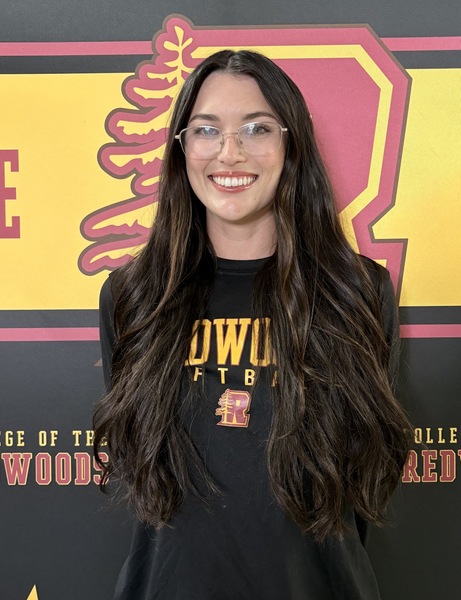
Coach’s Corner: Q & A with Head Softball Coach Micaela Harris
Published on Feb 10 2026Q: Can you give us some background on yourself? (Where you grew up, where you went to high school, etc.)
A: I grew up in Rocklin, CA and attended Whitney High School. I played for a travel ball team in the Sacramento area called Miken Elite Gold. We won many titles including the World Series, placed first in the Colorado Sparkler, placed third the following year in the same tournament, and placed second in Western Nationals in Utah. I moved to Humboldt County in 2017 because I received a softball scholarship at Cal Poly Humboldt.
Q: What’s your approach to coaching and player development?
A: My approach to coaching and player development is based on the belief that everything we do is a learning opportunity. I want our athletes to feel supported, valued, and truly heard, because that is when they are able to grow the most. My goal is not just to develop strong softball players, but confident, resilient women who are comfortable being themselves and using their voices. We encourage our athletes to bring their full selves to practice and competition, and we place a strong emphasis on building genuine relationships. When we push our players, it is important to us that they understand it comes from a place of care, trust, and belief in their potential, not criticism. That foundation allows them to compete freely and continue to grow both on and off the field.
Q: How do you define success for your team?
A: We define success by how we prepare every single day. Our goal is to make practices challenging so that games feel easier and more controlled. We practice at a fast pace and often create pressure by having multiple balls in play, which forces our athletes to communicate, focus, and trust their training. When we get into games and things slow down and there is only one ball going at a time, our players feel confident and prepared. Success also shows up in our culture. We take pride in being one of the loudest and most energetic teams, and that energy reflects our passion, togetherness, and competitive mindset.
Q: How do you handle challenges or setbacks with your players?
A: We handle challenges and setbacks together as a team. We see our program as a family, and when one person is going through something, we all rally around them to let them know they are not alone. Our athletes know they are supported not just as players, but as people. We want to create an environment where they feel safe, understood, and encouraged. Softball is a place where they can forget about anything going on, reset, have fun, and feel connected to something bigger than themselves. We believe that supporting our athletes through adversity helps build trust, resilience, and stronger relationships across the team.
Q: What do you emphasize most in practice?
A: Energy and effort are the two things we emphasize the most in practice, every single day. They are the biggest controllables and something our athletes can choose regardless of the situation. That is all we ask of them when they step on the field. When energy and effort are consistent, improvement follows. Those standards have become part of our identity and help drive accountability, competitiveness, and growth within the program.
Q: What’s the most rewarding part of working with this group of athletes?
A: The most rewarding part of coaching this group is the relationships and the bond they share. This team works extremely hard and genuinely cares about one another. That connection is rare and special, and it shows in how they compete, support each other, and respond to adversity. Being able to coach a group of athletes who value each other and enjoy being together makes the experience incredibly fulfilling.
Q: How do you foster leadership on the team?
A: We intentionally focus on leadership development, especially during the fall. Each week we spend time on mental skills training, because softball is such a mental game and that aspect often gets overlooked. Just like physical skills, mental skills need to be practiced and developed. We have open and honest conversations about leadership, communication, accountability, and confidence, and what those traits look like in daily actions, at practices, and games. Our athletes have taken ownership of those lessons and have stepped into leadership roles in meaningful ways, both on and off the field. These girls know what they want out of this season and know how to respond when things get tough, or how to pick each other up when things are not always going their way.
Q: What’s one thing your players might say about your coaching style?
A: I believe my players would describe my coaching style as open, approachable, and very supportive. I am not a coach who yells at athletes for making mistakes, because I never want them to play with fear of failure or performance anxiety. Errors are a part of the game, and how we respond to them matters far more than the mistake itself. When something goes wrong, we focus on having conversations about what happened, what can be done differently next time, and how to move forward. We talk a lot about failure as a learning opportunity. Instead of feeling sorry for yourself or dwelling on what cannot be changed, we focus on learning from it and moving on. The outcome has already happened, so our energy is better spent on the next play. Creating that mindset allows our athletes to play freely, stay confident, and trust themselves even after setbacks. I also believe in leading by example and building strong relationships. I value my players’ thoughts and work hard to create an environment built on trust and honest communication, where we have real conversations rather than just one-way instruction. I want our athletes to feel comfortable asking questions and sharing their perspectives. At times, my coaching staff and I will jump into practices to show them that we are willing to do what we ask of them and that we are all working toward the same goals together. As a young coach who competed at the collegiate level as recently as 2023 and had a successful playing career, I understand firsthand how demanding it can be to be a college athlete. Because of that, we have open and honest conversations about how difficult it can be at times. Some days you are not at 100%, and that is okay. What matters is continuing to show up and giving 100% of whatever you have that day, even if that is only 80%. Those conversations help our athletes trust the process, understand the value of resilience, and recognize that if they want to be one of the best, there will be times that require sacrifice, patience, and belief in the long-term growth.
Q: What are your hopes for the rest of the season?
A: My hope for the rest of the season is that our athletes truly enjoy the experience and play with joy. When we are having fun, we play our best softball. I remind our players often that if you are not having fun, then be fun, because energy is contagious and can completely change the tone of a game. It is easy for softball to start feeling like a job, especially at a competitive level, and I never want our athletes to lose sight of why they started playing in the first place. Not having a season last year was extremely difficult, especially for our returners, but our athletes stayed committed and trusted the process. They continued to show up, work hard, and believe in what we are building. Now, we are ready to show everyone who we are. We are a new team that has grown through adversity, and we are excited to compete, play with confidence, and make lasting memories together.